

Introduction
Landscape resilience is the ability of a landscape to maintain its desired ecological functions, native biodiversity, and critical processes over time, even during changing conditions, shocks, and uncertainties. The Egyptian coastline, a vital economic and ecological zone, faces increasing threats from climate change and human activity. Rising sea levels, coastal erosion, and extreme weather events present significant challenges for the region’s long-term sustainability. However, nature provides a powerful tool for buffering these threats: mangrove forests. By examining the ecological processes within these vital ecosystems, we aim to demonstrate how mangroves exemplify the concept of landscape resilience, offering a sustainable solution for the protection and prosperity of the Egyptian coast.
The Importance of Mangrove Trees
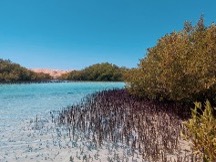
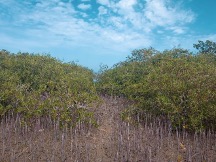
Unlike most trees, mangroves adapted to live in high-salinity environments. This unique characteristic positions them as a critical component of coastal protection strategies, particularly relevant for Egypt as it faces rising sea levels due to climate change. Their dense network of roots functions as a natural barrier, effectively absorbing wave force and minimizing erosion.
Furthermore, mangroves, widely known as “coastal kidneys” play a crucial role in filtering pollutants and sediments from land runoff. This filtration process safeguards vital coral reefs by ensuring cleaner water, a necessity for the health of marine ecosystems and the success of coastal tourism.
How Mangroves Protect the Planet from Climate Change
The significance of mangroves extends beyond coastal protection. These remarkable ecosystems fight against climate change, earning the title of “blue carbon ecosystems” due to their exceptional capacity to store carbon. Mangroves possess the ability to store three to four times more carbon than land-based forests. It is achieved through a two-fold process: storing carbon within their leaves and contributing to the creation of “blue carbon.” As leaves fall and settle in the mud and silt below, they undergo a transformation, becoming part of this underwater carbon pool. In essence, mangroves act as natural carbon filters, capturing carbon dioxide from the atmosphere and storing it effectively, offering a powerful natural solution for mitigating the effects of climate change.
How Mangroves Benefit Egyptian Communities
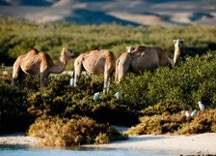
How Red Sea coast of Egypt isn’t just home to the fascinating grey mangrove forests; these ecosystems become vibrant hubs of life. The most common mangrove species, the grey mangrove, typically grows in clusters around tidal waterways and on higher ground, reaching heights of 3-8 meters. These highly adaptable trees boast unique “respiratory roots” that rise above the ground to aid in oxygen intake. Their leaves, simple and oval-shaped, are equipped with special glands to remove excess salt – a vital adaptation for their saltwater environment. Unfortunately, these leaves are a food source for camels, and overgrazing can be a problem in some areas.
But the benefits of these mangroves extend far beyond their own survival. Sheltered by the dense network of roots below the waterline, young fish find safe havens to grow before maturing into open waters, supporting healthy fish populations that benefit local fishers. Above the water, the lush foliage provides a sanctuary for a diverse array of birds. Additionally, the sweet scent of the grey mangrove’s small yellow flowers attracts insects, particularly bees. These bees find an abundance of nectar within the mangroves, producing a unique and highly sought-after “mangrove honey” that local communities can harvest and sell, generating additional income. Therefore, healthy mangrove ecosystems on the Red Sea coast play a crucial role in not only the ecological health of the environment but also the social and economic well-being of the people who live alongside it.
The Ethical Responsibility of Landscape Design
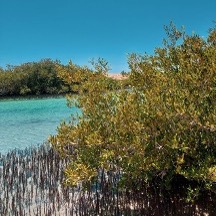
Landscape architects have a critical role to play. By prioritizing ethical practices that respect existing natural landscapes, they can integrate mangrove restoration into suitable coastal projects. This means incorporating these trees into softscape designs, fostering a harmonious blend of human development and the natural environment. Furthermore, awareness is key. Collaboration between government agencies and NGOs is crucial to educate both local communities and developers about the importance of preserving and expanding these vital ecosystems.
Conclusion
Egypt’s mangrove forests stand as a testament to the power of nature-based solutions. These resilient ecosystems offer a multilayered defense against climate change threats, safeguarding the coastline from erosion, filtering pollutants, and supporting vibrant marine life. By recognizing the value of mangroves and integrating their restoration into coastal development plans, landscape architects, government agencies, and local communities can work together to ensure a prosperous future for both Egypt’s precious ecosystems and its people. The continued health of these “coastal kidneys” is vital not only for environmental sustainability but also for the economic and social well-being of the locals.
Keywords
Landscape resilience, Mangrove forests, Coastal protection, Blue carbon ecosystems, Nature-based solutions.
References
Bartoli, M., Frediani, M., & Rosi, L. (Eds.). (2023). Carbon-Based Material for Environmental Protection and Remediation. https://www.intechopen.com/chapters/71927
United Nations Environment Programme (UNEP). (2023, May 18). Restoring mangrove forests: A key nature-based solution. https://www.unep.org/news-and-stories/speech/restoring-mangrove-forests-key-nature-based-solution.
MangroveWatch. (n.d.). MangroveWatch. Retrieved May 6, 2024, from http://mangrovewatch.org.au/ .
Alongi, M. A. (2008). Mangrove forests: Resilience, protection from natural disasters, and their نقشArabic for “role”) for coastal communities. Ocean & Coastal Management, 51(12), 1069-1075.
 Egyptian Society of Landscape Architects (ESLA)