
[NOT] FROM THE PRESIDENT’S DESK
My guest for this month is Dr Amir Gohar, a landscape architect, urban designer, and tactical urbanism expert. With a nearly two-decade career, Dr Gohar has made significant contributions to the field, working with planning firms, municipal governments, research institutions, international development agencies, private-sector corporations, and local community organizations.
His most recent work involves finding the right balance between urban development and environmental protection, which resulted in his book Tourism Governance: A Critical Discourse on a Global Industry, which was published in June 2022.
I have never met Dr Gohar in person. Still, we have spoken on many occasions, and what impressed me is his desire to establish landscape architecture as an important profession in Egypt. He was the driving force behind the recent establishment of the Egyptian Society of Landscape Architects (ESLA) and its inclusion in the IFLA Africa fold.
ECOTOURISM: A PROBLEM OR A SOLUTION
By Amir Gohar
INTRODUCTION
Following the 1979 peace treaty and the complete return of the Sinai Peninsula to Egypt in 1982, the country began focusing on its environmental assets, including national parks. Egypt’s national parks encompass a diverse range of environments, including mountains, deserts, oases, coastal and marine areas, as well as parks linked to urban settings. Law 102 of 1983 authorizes the Prime Minister to designate certain areas as national parks. A Prime Minister’s decree specifies the boundaries of each park and sets forth the key principles for their management and resource conservation. To date, twenty-four national parks have been established under this law.
The Egyptian Red Sea parks are a unique resource whose potential has not yet been realized. Throughout the past five decades, development for mass tourism has destroyed large areas around these parks constituting direct threat on their fragility. Innovative initiatives have taken place to protect the parks and minimize tourism impacts on them. Despite these attempts, the development pattern has not changed much, and the knowledge gained remains within a limited number of people.
CHALLENGES OF CURRENT STRATEGIES
Ecotourism and national parks share a complex relationship globally, and Egypt’s parks are no exception. Striking a balance between development and conservation is a contentious issue both professionally and institutionally. Ecotourism is frequently seen as a way to develop parks and ensure their economic sustainability. Nevertheless, despite various considerations and guidelines, the expansion of tourism within the park system carries significant risks.
1- Technical Challenges
(i) Our understanding of ecotourism:
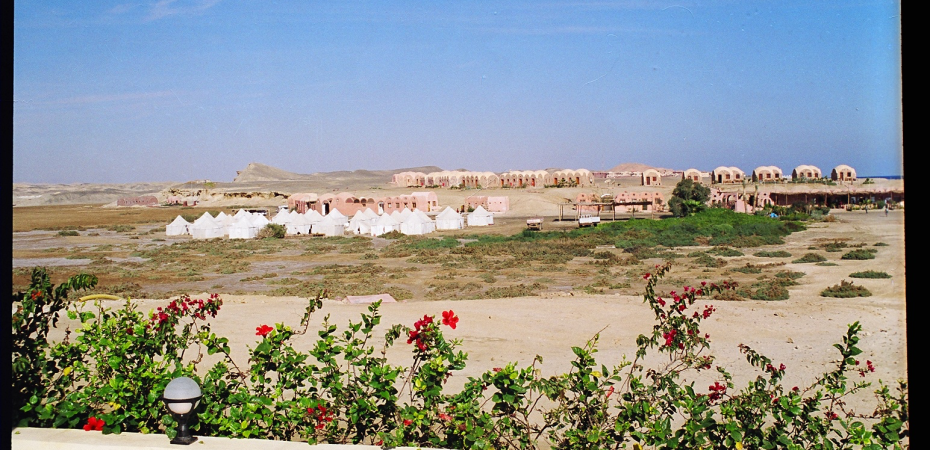
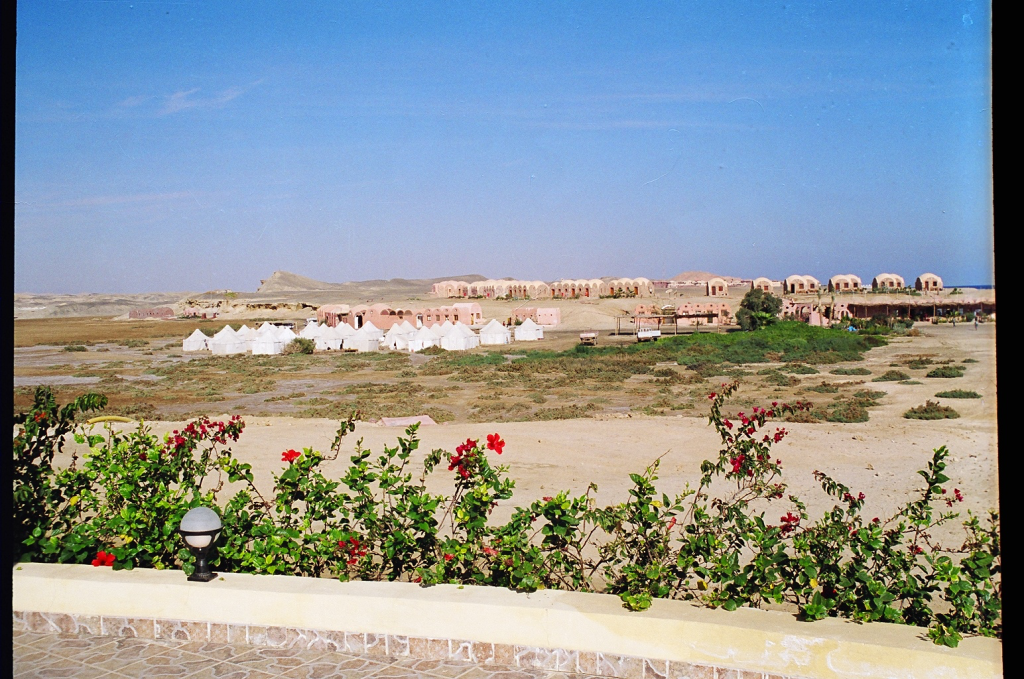
While ecotourism has so many definitions that prevent us from understanding it or agree on its actual meaning. The International Ecotourism Society defines ecotourism as: “responsible travel to natural areas that conserves the environment, sustains the well-being of the local people, and involves interpretation and education”. The application of such definition is not manifested locally the way landscape planners would like to see, and therefore each and every project can and do claim being ecotourism. Such a self-declared industry makes it very unlikely to have development within the parks that is guided by environmental protection. An example from Wadi El-Gimal National Park in the Egyptian Southern region of the Red Sea is an example of that demonstrates the importance of the local understanding and local institutional setup that allows for the ecolodges to be developed.
(ii) Planning the landscape
While there are several experts focusing on different aspects of the park such as flora, fauna, geology, geomorphology, marine, … and hydrology, the spatial dimension remains absent from the core expertise. The role of landscape planners seems to be absent from the overall parks’ development process. The landscape planners are the ones in a position to designate areas for protection and shades of development intensity based on inputs from different experts. They are also the ones able to translate the different aspects of the law on the map.
- Designing for Ecotourism (Eco-lodges)
In a country dominated by vernacular architecture around the Nile valley and with schools of architecture teaching Hassan Fathy as the authentic style, little attention has been given to the authentic and local building styles away from the valley. Egypt’s parks expand to cover mountainous areas, oasis, sand dunes, rocky terrains, coastal plains, and island. Communities along these different contexts vary from fishermen, shepherds, farmers, traders, and artisans. Each of these has its own building styles that is appropriate both culturally and ecologically. Most of the design attempts remain either inspired by the Nile valley architecture or imported from with substantial history of ecotourism such as South Africa.
2- Institutional Challenges
(i) Lack of coordination between authorities
The parks are designated by environmental authorities within specific governorates, with tourism projects managed by tourism authorities and overseen by the shoreline protection authority; projects that are promoted through tourism promotion authorities and aligned with local municipal boundaries are included. A major challenge in addressing this complex development system is the lack of coordination between central and local governments, which hinders the creation of integrated planning solutions.
(ii) Absence of sufficient stakeholder consultation
On one hand, local communities are often not consulted in the proposed plans, and on the other hand, developers frequently lack awareness of the local context and environmental settings, making decisions based on maps in their headquarters in Cairo. This lack of stakeholder engagement leads to several issues for the local community such as gentrification, relocation of local communities, and a negative impact on their fishing, grazing and livelihood in general. And issues on developers by having resorts planned and built within flood plains or in conjunction with mangrove trees or cultural sites.
(iii) Climate change & dynamism of core ecological zones
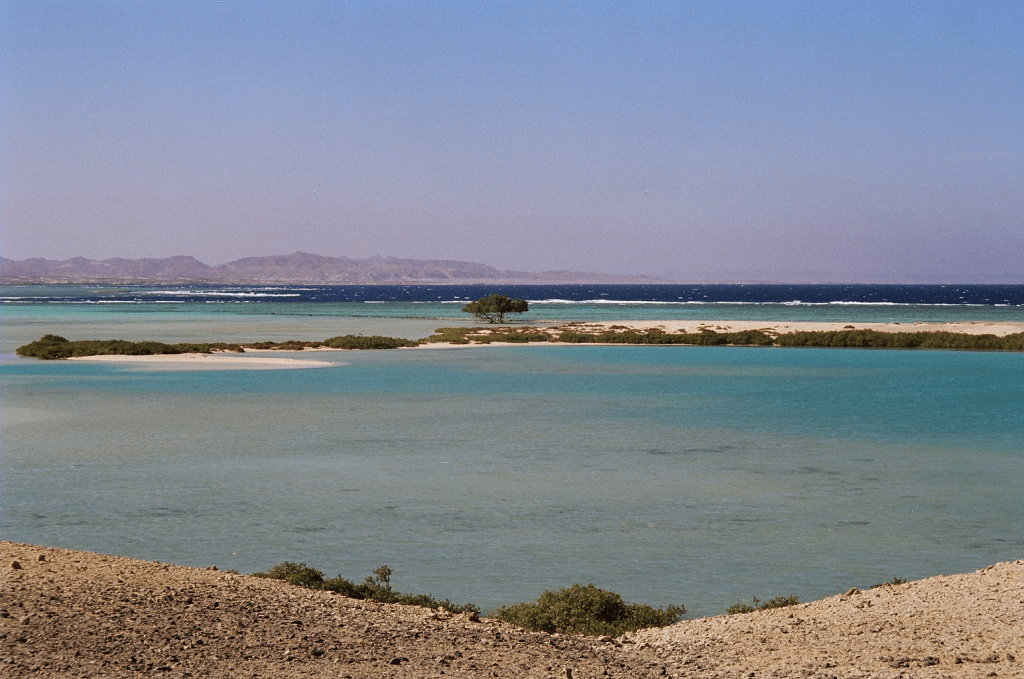
The environmental regulations and current practices for shoreline setback are developed in isolation of risks that may occur from shoreline dynamics such as sea level change, realization of different habitat basic needs (e.g. turtle nesting sites and coastal mangrove zones).
(iv) Urban expansion as a threat to parklands
With the continuous increase in land values around main cities, parks with areas closer to main cities or main urban centres became subject to urban expansion as they become attractive for real estate developers. One of the possibilities the environmental authorities revert to is to allocate the land of the parks for ecotourism projects to generate revenue. The competition between different land uses will always mean that investing in the environment will always be second place because the ROI is less than if taken for a real-estate housing project.
Solutions & the Role of Landscape Architects
Fieldwork and hands-on experience in many of the national parks and especially the parks in Egypt show that ecotourism can be part of the solution only when the following recommendations are taken into consideration:
1- Like in many parts of the world, our understanding of ecotourism is often tied to architectural characteristics (such as shape, form, and light structure), which provides a limited perspective for truly assessing the environmental compliance of lodging facilities. Egypt’s national parks cover a wide range of environments and encompass various social structures, including those of different tribal and nomadic communities. It is essential to develop robust, localized parameters for each specific region within the parks. These parameters should go beyond the common, vague recommendations of: ‘using local materials’ and ‘involving local communities’. They need to be integrated into environmental laws, rather than remaining as optional guidelines.
2- It is recommended to consult with local residents regarding their experiences with ecological factors in the area. Such consultations can reveal important insights that might not be evident during the decision-making process or even a single site-visit. For example, consulting local tribes inform professionals on aspects such as the history of past floods, seasonal wind patterns, the past projects’ impact on local flora, and the movement networks of fauna (including migratory birds, turtle nesting, and camel trails). This consultation should encompass extensive public participation, engaging nomadic communities in the planning process, and establishing a communication channel between developers and local residents in the national parks’ areas.
3- Landscape planners play an essential role when it comes to national parks, as they are trained to integrate ecological and social aspects when planning large parks with diverse activities. Their involvement helps minimize conflicts over resources and ensures that tourism development is managed in a way that allows the ecosystem to remain sustainable. For example, in the Red Sea parks, local acacia and mangrove trees are crucial to the ecosystem. Involving landscape planners at early stages reserve their environmental and cultural roles which is of utmost importance to the regions long-term sustainability.
4- Develop land suitability maps to identify core areas for protection and areas less suitable for development. These maps help safeguard people’s lives and investments from potential risks, such as flooding in wadi floors. For example in the land allocation process on the Red Sea, the flat attractive areas for tourism development are often the most vulnerable ones to flash floods.
5- Eliminate the notion that park lands must compete with real estate in value to remain protected. Urban expansion should always respect the boundaries of these parks and never be considered an alternative land use, especially around a congested city like Cairo.
Conclusion
National parks play a vital role in Egypt, and it is crucial to protect these assets from rapid urbanization and the influx of tourism driven by economic supply-demand models. Landscape planning is essential for the designation, management, and monitoring of national parks. Involving landscape planners early in the discussion can help minimize conflicts, prevent potential problems, and resolve current conflicts.
This consultation could include a wide range of public participation, engaging the nomads in the planning process and allowing for a communication channel between the developer and local residents in the Red Sea region.
 Egyptian Society of Landscape Architects (ESLA)