
Introduction
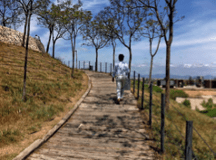
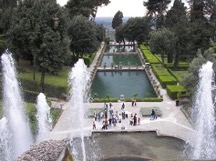
This article investigates the multifaceted role of form in landscape architecture, positing it as a critical element in constructing experientially engaging and semantically rich landscapes. Moving beyond the realm of mere aesthetics, form transcends to a fundamental design principle, akin to the tools wielded by a sculptor or painter. Through the strategic manipulation of spatial elements – pathways, water features, vegetation, and hardscapes – designers create a distinct spatial morphology. This morphology, the spatial organization of the landscape, directly influences user experiences and fosters a connection with the natural environment. Consider the contrasting experiences evoked by a winding pathway, mimicking the flow of a river, and a terraced garden featuring geometrically arranged beds. The meandering path (figure1), with its curvilinear form, encourages exploration and a sense of discovery, while the terraced garden as shown in Figure 2, with its rectilinear form, exudes a sense of order and control. Furthermore, form in landscape architecture draws inspiration from the natural world and employs artistic abstraction to create layered meanings. The organic forms of rolling hills, meandering rivers, and plant life serve as a rich source of inspiration. A curving pathway might echo the flow of a river in its design, while strategically placed boulders could reference the forms of natural rock formations. However, form is not simply about literal replication. Designers can deconstruct the essence of a natural form, such as a flower, and translate it into a sculptural element for a garden. Similarly, the rhythmic patterns of waves crashing on the shore could inspire the layout of a plaza. By creatively reinterpreting natural forms and incorporating artistic expression, landscapes become not just visually appealing but also experientially engaging and imbued with meaning.
The Spatial Morphology and User Perception
Spatial organization, the essence of user experience in landscape architecture, is dictated by the interplay of various elements. Pathways, water features, vegetation, and hardscapes act as the fundamental building blocks, collectively defining the landscape’s unique spatial morphology. This morphology refers to the three-dimensional organization of space within the landscape. imagine contrasting examples: a cascading waterfall plunging into a secluded pool lying amongst rocks, versus a sprawling plaza punctuated by strategically placed groves of trees. These contrasting forms evoke distinct user experiences. The dynamic form of the cascading waterfall with its surrounding rocks fosters a sense of awe and immersion in nature, while the expansive plaza with interspersed groves creates a sense of openness and invites social gathering. Through this manipulation of form, designers can control the landscape’s sightlines.
The Spatial Morphology and User Perception
Spatial organization, the essence of user experience in landscape architecture, is dictated by the interplay of various elements. Pathways, water features, vegetation, and hardscapes act as the fundamental building blocks, collectively defining the landscape’s unique spatial morphology. This morphology refers to the three-dimensional organization of space within the landscape. imagine contrasting examples: a cascading waterfall plunging into a secluded pool lying amongst rocks, versus a sprawling plaza punctuated by strategically placed groves of trees. These contrasting forms evoke distinct user experiences. The dynamic form of the cascading waterfall with its surrounding rocks fosters a sense of awe and immersion in nature, while the expansive plaza with interspersed groves creates a sense of openness and invites social gathering. Through this manipulation of form, designers can control the landscape’s sightlines.

A pathway that gradually dips below a berm, creating a sense of anticipation for the reveal beyond, contrasts with a winding path that snakes along a hillside, offering panoramic vistas throughout the journey. In essence, form manipulation becomes a tool for guiding movement and influencing user experience within the designed space. Spatial design principles find physical embodiment in the built environment, operationalizing designer intent and demonstrably influencing user experience. Tranquility-focused objectives, for example, translate into secluded courtyards featuring central reflecting pools, documented to evoke calmness through physiological responses. Conversely, vibrant communities are fostered through interconnected pathways, demonstrably increasing social interaction due to higher encounter rates. The natural world serves as a continuous source of inspiration for form, with rolling hills informing curving pathways and strategically placed boulders echoing natural rock formations. However, form creation transcends mere replication. Artistic expression and abstraction play a vital role, with designers deconstructing natural forms, such as flowers into sculptures, or reinterpreting wave patterns into plaza layouts. This creative reinterpretation enriches the user experience and adds layers of meaning to the landscape, fostering a deeper connection with the environment.
Conclusion: Form – The Foundation of Meaningful Landscapes
Landscape architects strategically manipulate form to create spaces that transcend mere visual appeal. Form actively shapes user experience, functioning as a tool to communicate design intent and foster positive connections with the natural world. Research has shown that specific forms can elicit measurable responses. For instance, serene Japanese gardens utilizing minimal, often geometric forms, have been linked to promoting mindfulness through documented reductions in stress markers. Conversely, vibrant children’s play areas employing organic and biophilic forms demonstrably encourage exploration through increased physical activity levels. By understanding the power and potential of form, landscape architects can create spaces that are not only aesthetically pleasing but also demonstrably functional, promote well-being, and cultivate a deeper connection with the natural environment.
Keywords
Landscape Architecture, Spatial Design, Form, User Experience, Natural Forms, Abstraction
References
- Guneroglu, N., & Bekar, M. (2019, April 1). A Methodology of Transformation from Concept to form in Landscape Design. Journal of History Culture and Art Research, 8(1), 243. https://doi.org/10.7596/taksad.v8i1.1625
- Al-Deen Mohammad, O. H., & Alabdullah, M. M. (2022, October 11). Landscape architecture design as an art creative practice: A studio teaching model. Landscape Architecture and Art, 20(20), 92–101. https://doi.org/10.22616/j.landarchart.2022.20.10
- Yılmaz, S., Düzenli, T., & Çiğdem, A. (2018, July 2). Peyzaj Tasarım Eğitiminde Bir Biçim Arama Yöntemi: Doğadan Esinlenme / A Form Creating Method in Landscape Design Education: Inspiration from Nature. Journal of History Culture and Art Research, 7(2), 376. https://doi.org/10.7596/taksad.v7i2.1427
- Dee, C. (2004, March 1). Form and Fabric in Landscape Architecture. Taylor & Francis. http://books.google.ie/books?id=Jv9y5ShROaMC&printsec=frontcover&dq=Form+and+Fabric+in+Landscape+Architecture:+A+Visual+Introduction&hl=&cd=1&source=gbs_api
- Olin, L. (1988). Form, Meaning, and Expression in Landscape Architecture. Landscape Journal, 7(2), 149–168. https://doi.org/10.3368/lj.7.2.149
- Dorozhkina, E. A. (2018, December 14). Forms of landscaping modern architectural environment. IOP Conference Series: Materials Science and Engineering, 451, 012168. https://doi.org/10.1088/1757-899x/451/1/012168
- MURAKAMI, S. (2001, March 30). Ambiguity in Form of James C. Rose. Journal of the Japanese Institute of Landscape Architecture, 64(5), 501–506. https://doi.org/10.5632/jila.64.501
 Egyptian Society of Landscape Architects (ESLA)